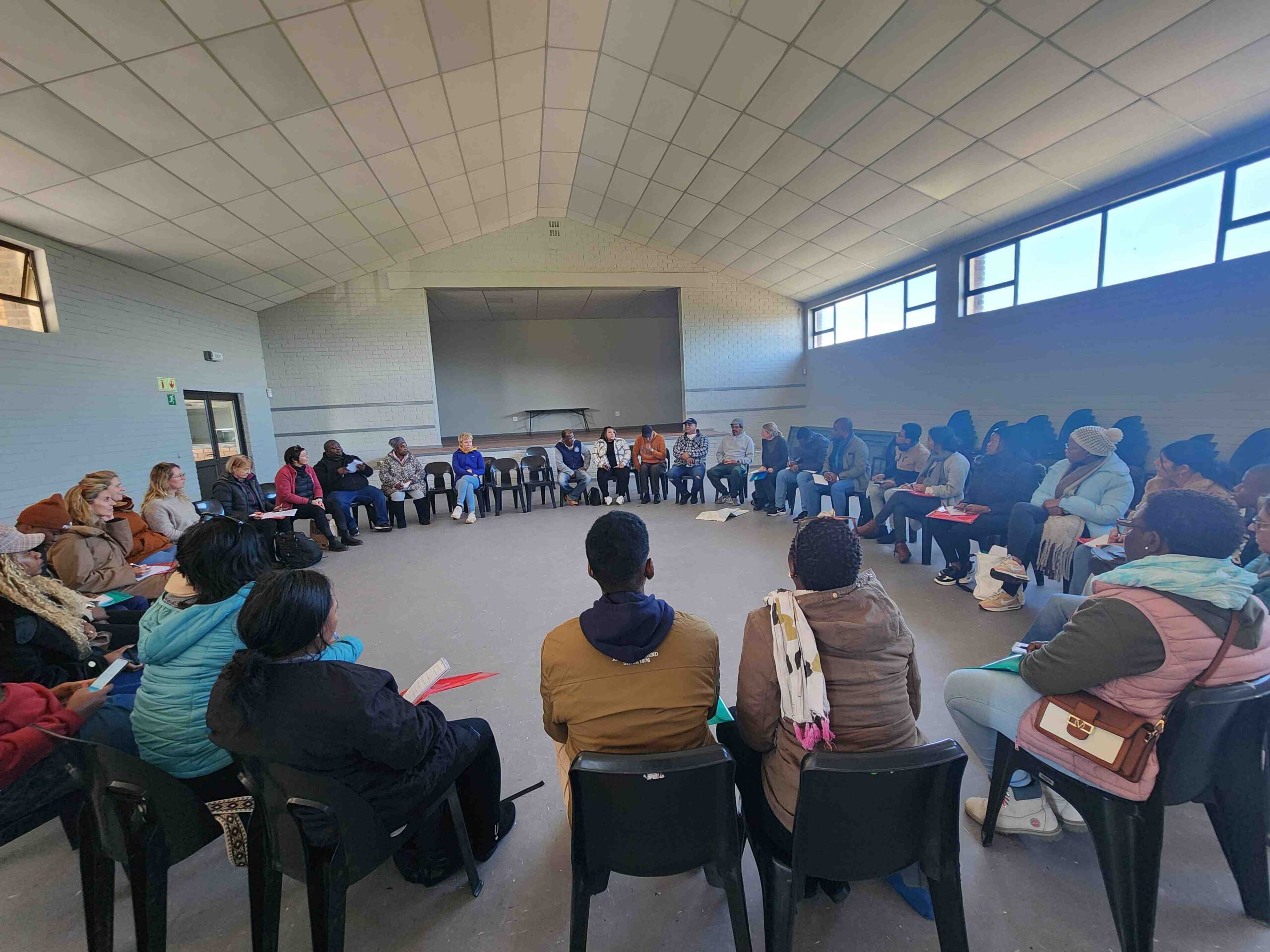
Fishers, community leaders, government officials, and educators from 8 countries gathered for a 5 – day workshop training.
In August, fishers, community leaders, government officials, and educators from 8 countries gathered for a 5 – day workshop training at the South African National Biodiversity Institute, Cape Town, South Africa.
Western Indian Ocean is known for its rich biodiversity and vibrant coastal communities, this region is facing growing environmental and socio-economic pressures, including habitat degradation, overfishing, and climate change impacts. Addressing these complex challenges requires approaches that are participatory and inclusive of different perspectives and knowledges, seeking locally relevant solutions.


Supported by Western Indian Ocean Marine Science Association (WIOMSA) and the Ocean Decade Capacity Development Facility, a consortium of regional and international partners convened a highly interactive training workshop to learn how to collaboratively develop sustainable solutions to real-life challenges in the Western Indian Ocean region. The training was aimed at equipping participants with the concepts, approaches, tools, and hands-on experience to adopt co-design approaches. And was designed specifically for the ocean actors from the Western Indian Ocean (WIO) region.


Through expert-led sessions, real-world case studies, peer learning, and a field trip, participants were exposed to:
“This training helped me see that local and traditional knowledge is just as important as science. It showed me how different people, including indigenous fishers, the park manager, and the industry can learn from each other and work together, even with different interests.”
Massive thank you to our partners in co designing and facilitating the workshop, Nelson Mandela University, South African National Biodiversity Institute, University of Cape Town, International Ocean Institute Germany, and the Leibniz Centre for Tropical Marine Research (ZMT).